Heating, cooling, and ventilation (HVAC) systems present a significant opportunity for efficiency, cost, and greenhouse gas emissions gains for most companies. They account for over 1/3 of the energy consumed in a typical commercial building, a number that can grow even higher in campus and industrial spaces.
Fortunately, there are many efficiency measures that address HVAC use, from smart controls and software, to duct leak detection and insulation, to more efficient furnaces and air conditioning. In fact, at Rappel, we track and model over 70 different energy-saving HVAC levers in our CO2-AIM analytics model.
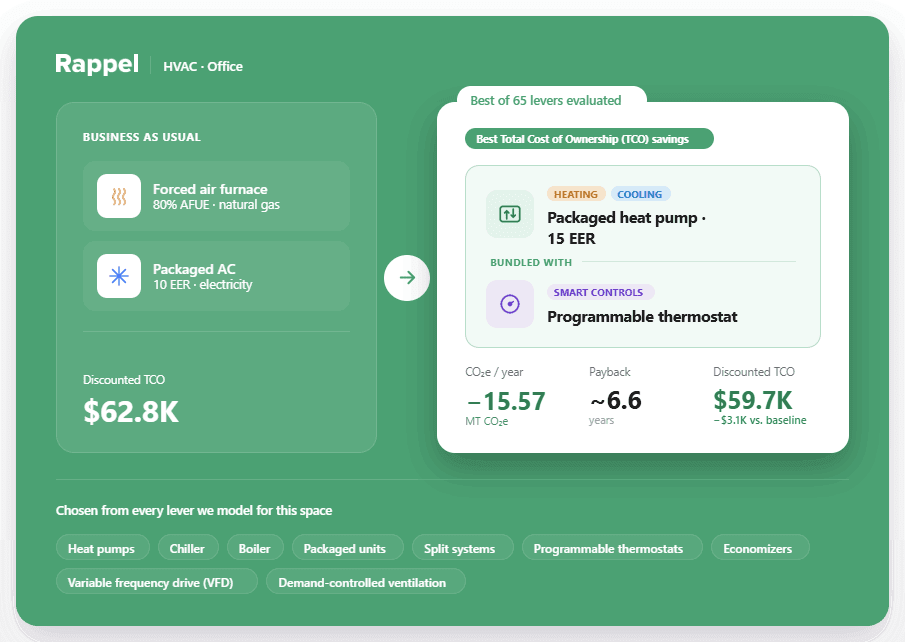
Traditionally, buildings have used separate equipment to provide their heating (often fueled by natural gas) and cooling (usually powered by electricity). Heat pumps, however, are increasingly creating new choices to reduce cost and emissions through a single system that provides both heating and cooling.
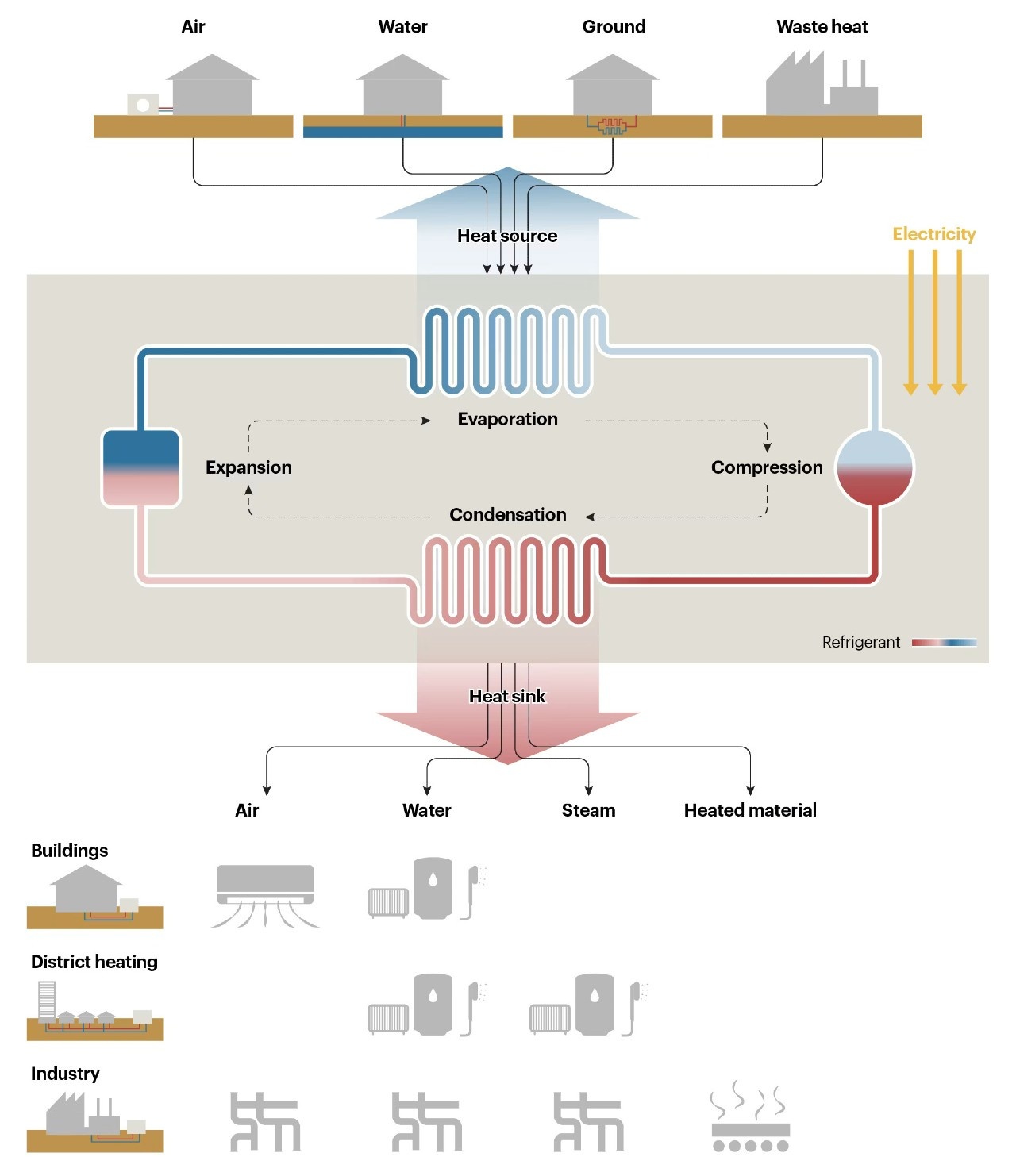
Heat pumps use the surrounding air or ground environment to produce hot and cold air, often more efficiently than traditional furnaces and AC systems. Originally boosted by federal and state incentives, heat pumps are already the lowest cost heating option in regions with mild climates, high cooling demands, or favorable electricity-to-gas prices (IEA ETP 2026).
However, the payback from heat pumps is harder for companies to calculate. Facility managers must compare two legacy systems against one new integrated technology, and the same heat pump can have very different economics depending on a building's climate, how and when it actually operates, and the local price of electricity relative to gas.
A facility in a mild climate with high cooling demand and favorable power prices may see fast payback; the same equipment in a colder, cheaper gas market may not. And that’s before operators consider the benefits of more traditional improvements, like controls and ventilation, that could improve the efficiency of existing systems without the same level of capital.
Rappel’s June CO2-AIM release makes it easier than ever to compare and prioritize HVAC levers across options small to large. Our updated model fully integrates heating and cooling along with climate conditions and operational profiles into one energy, economic, and carbon flow, giving companies the ability to compare furnaces, cooling units, and heat pumps, all in one place.
We’ve also simplified the noise around the many small upgrades companies can make, creating common packages of upgrades that allow companies to see the combined effects of integrated levers like smart controls and managed set points.